Readiness is what you do when the signs intensify. Scripture says the signs were never the trigger, and the ordinary hour was always the trap.
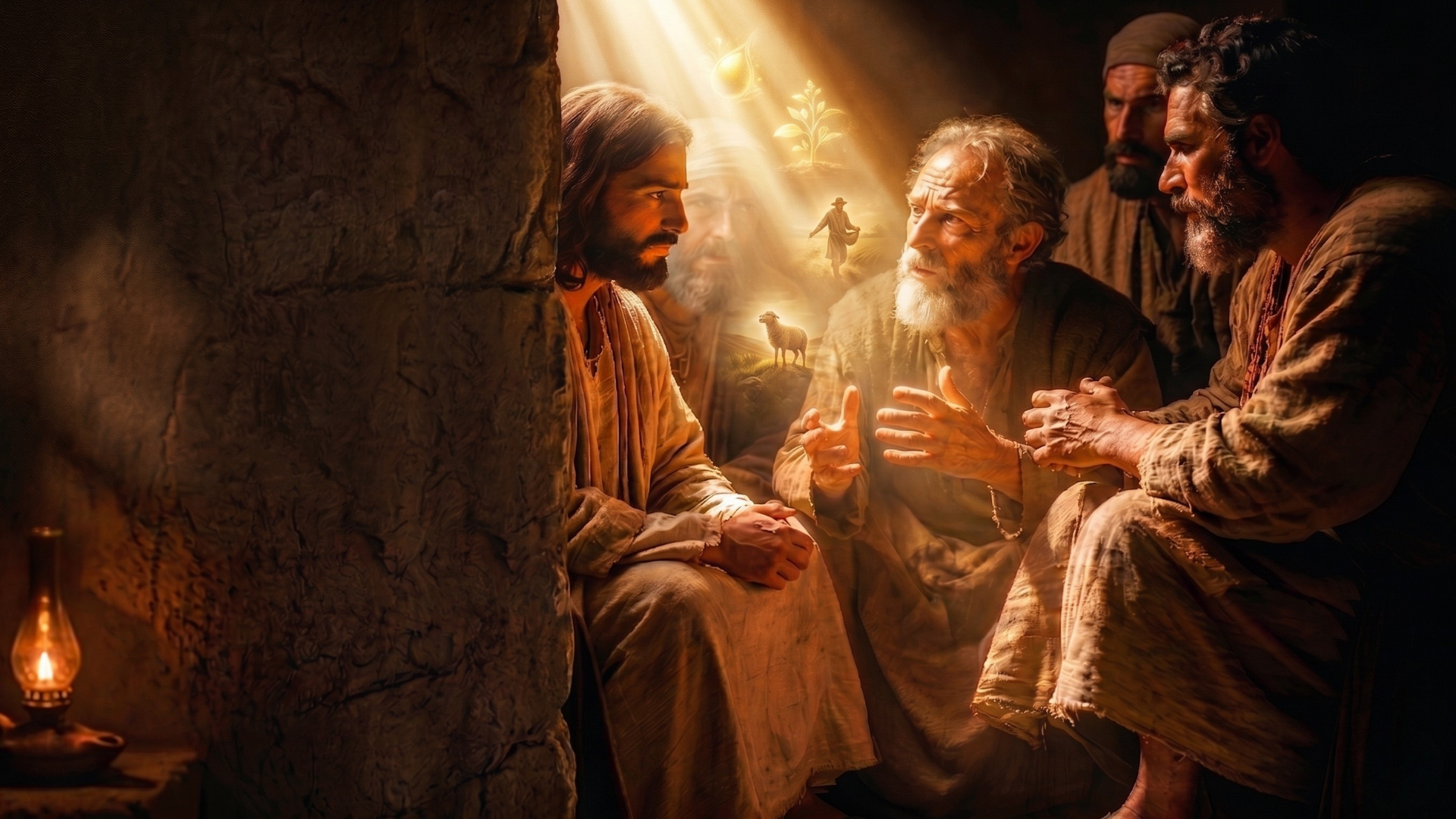
The disciples sat with Christ on the Mount of Olives and asked the heaviest question a human can ask. “What shall be the sign of thy coming, and of the end of the world?” (Matthew 24:3, KJV) They wanted a timeline. He gave them a paradox.
He told them the sun would go dark and the stars would fall. He told them the powers of heaven would be shaken. He told them to read the fig tree the way a farmer reads the season. And then, three verses later, He told them that no man knows the day or the hour. Not even the angels in heaven. Only the Father.
The signs are visible. The hour is hidden. And in the gap between those two facts, every Christian since has had to decide what watching actually looks like.
Most assume it means staring at the sky and bracing for the trumpet. Scripture says something different. The household that gets caught off guard in Matthew 24 is not the one that missed the signs. It is the one that fell asleep at the threshold while the signs were unfolding in plain view.
So here is the question this article answers. What does Christ mean when He says, “Be ye also ready,” and how do you live ready without surrendering your mind to fear?
The Spiritual Weight of the Hidden Hour
The hidden hour is not a flaw in the message. It is the message.
If God told you the date, your discipline would have an expiration label on it. You would coast for years and tighten up at the end. Christ knows this. So He removed the date. He left you with the season but not the day, with the signs but not the hour, because the only readiness that actually proves anything is the readiness that holds when the calendar offers no relief.
The danger then is not what you might assume. The disciples expected the threat to come from the visible: the falling stars, the darkened sun, the shaken powers of heaven. But Christ flipped the threat from the dramatic to the ordinary. The household most likely to be ruined is not the one watching the storm. It is the one whose master has stopped expecting the thief, because the thief has not come yet.
“But know this, that if the goodman of the house had known in what watch the thief would come, he would have watched, and would not have suffered his house to be broken up.” (Matthew 24:43, KJV)
The house is broken into not because the thief was extraordinary but because the watch was abandoned. That is the spiritual weight of this teaching.
The Scripture Foundation of the Unexpected Hour
Matthew 24 lays out a deliberate sequence. Christ begins with the visible and ends with the hidden, and the entire teaching pivots on the relationship between them.
He starts with cosmic upheaval. “Immediately after the tribulation of those days shall the sun be darkened, and the moon shall not give her light, and the stars shall fall from heaven, and the powers of the heavens shall be shaken.” (Matthew 24:29, KJV) This is not new imagery. The prophets used it for centuries. Joel said the sun would turn to darkness and the moon to blood before the day of the Lord. Isaiah said the stars would not give their light. Christ is taking the entire prophetic library and gathering it into Himself.
He follows with the fig tree. “Now learn a parable of the fig tree; When his branch is yet tender, and putteth forth leaves, ye know that summer is nigh: So likewise ye, when ye shall see all these things, know that it is near, even at the doors.” (Matthew 24:32-33, KJV) You can read the season. You are commanded to read it. The signs are not buried.
Then He removes the date. “But of that day and hour knoweth no man, no, not the angels of heaven, but my Father only.” (Matthew 24:36, KJV) The visible season, the hidden hour. The sentence is not a contradiction. It is a boundary.
Christ is saying that if you walk in the visible without acknowledging the hidden, you will set a date. If you obsess over the hidden without acknowledging the visible, you will go to sleep. Neither posture is watching. Both leave the household exposed.
Word Study: Coming (Greek, Parousia / παρουσία)
The Greek parousia (παρουσία) appears in the disciples’ original question in Matthew 24:3, where they ask Christ for the sign of His “coming.” Parousia means more than arrival. It carries the sense of presence, of being here in a sustained way, of an authority taking up residence. When a king made his parousia into a city, it was not a visit. It was the moment the city’s affairs came under his rule. Christ is not asked about a flyover. He is asked about the moment His authority becomes undeniable on the earth He created. The unexpected hour is the hour of His parousia, and the household that watches lives now in the manner that hour will require.
Christ at the Center of the Unexpected Hour
Christ does not deliver this teaching as a prophet describing someone else’s arrival. He delivers it as the One who is coming.
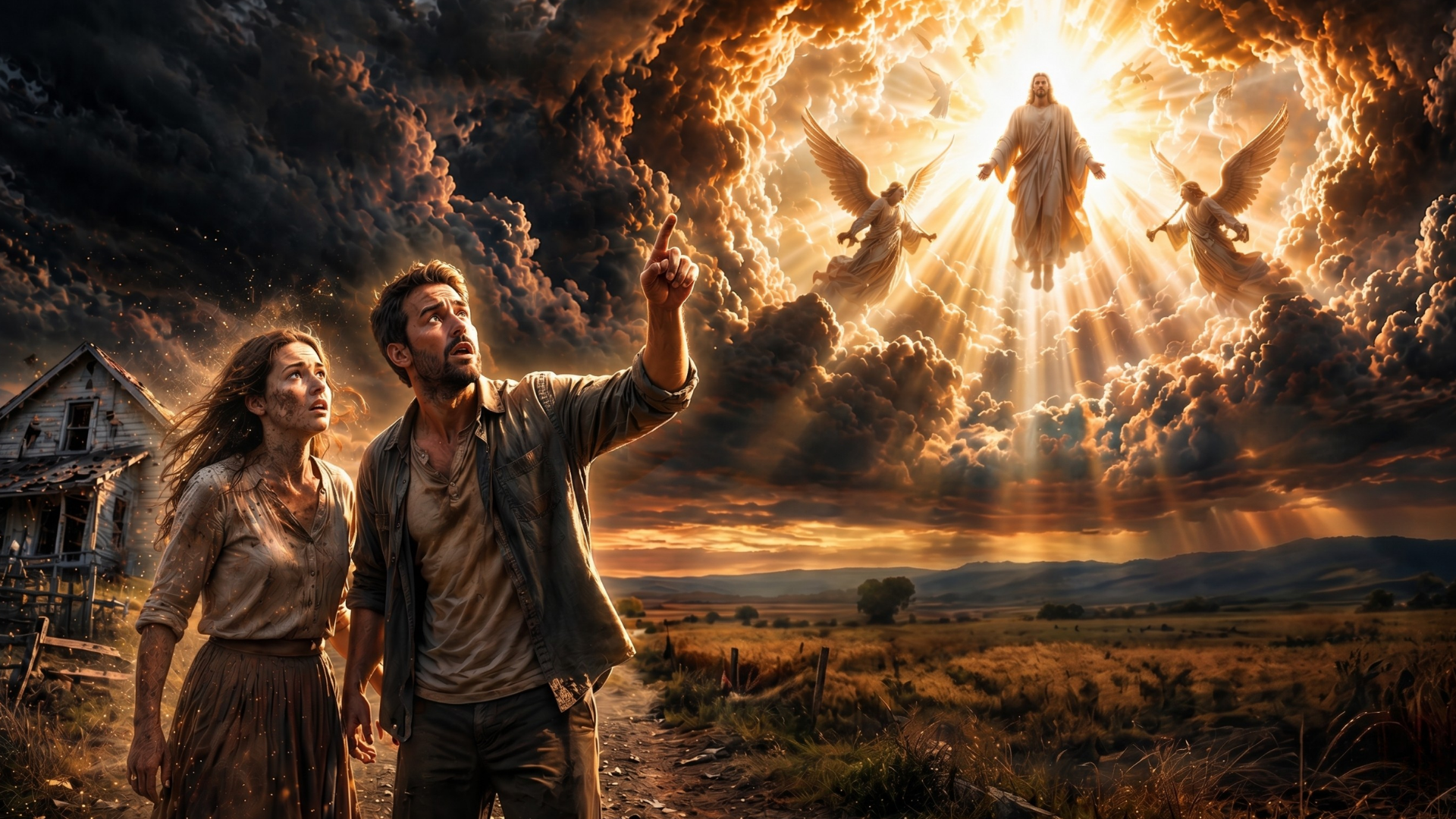
Daniel saw it first. “I saw in the night visions, and, behold, one like the Son of man came with the clouds of heaven, and came to the Ancient of days, and they brought him near before him. And there was given him dominion, and glory, and a kingdom.” (Daniel 7:13-14, KJV) When Christ tells the disciples “they shall see the Son of man coming in the clouds of heaven with power and great glory” (Matthew 24:30, KJV), He is naming Himself as the figure Daniel saw centuries earlier. The clouds He returns on are not stage smoke. They are the clouds of divine presence, the same clouds that filled the temple in 1 Kings 8 and the same clouds He ascended into in Acts 1.
But the heart of this section is not the clouds. It is what He came to do before the clouds.
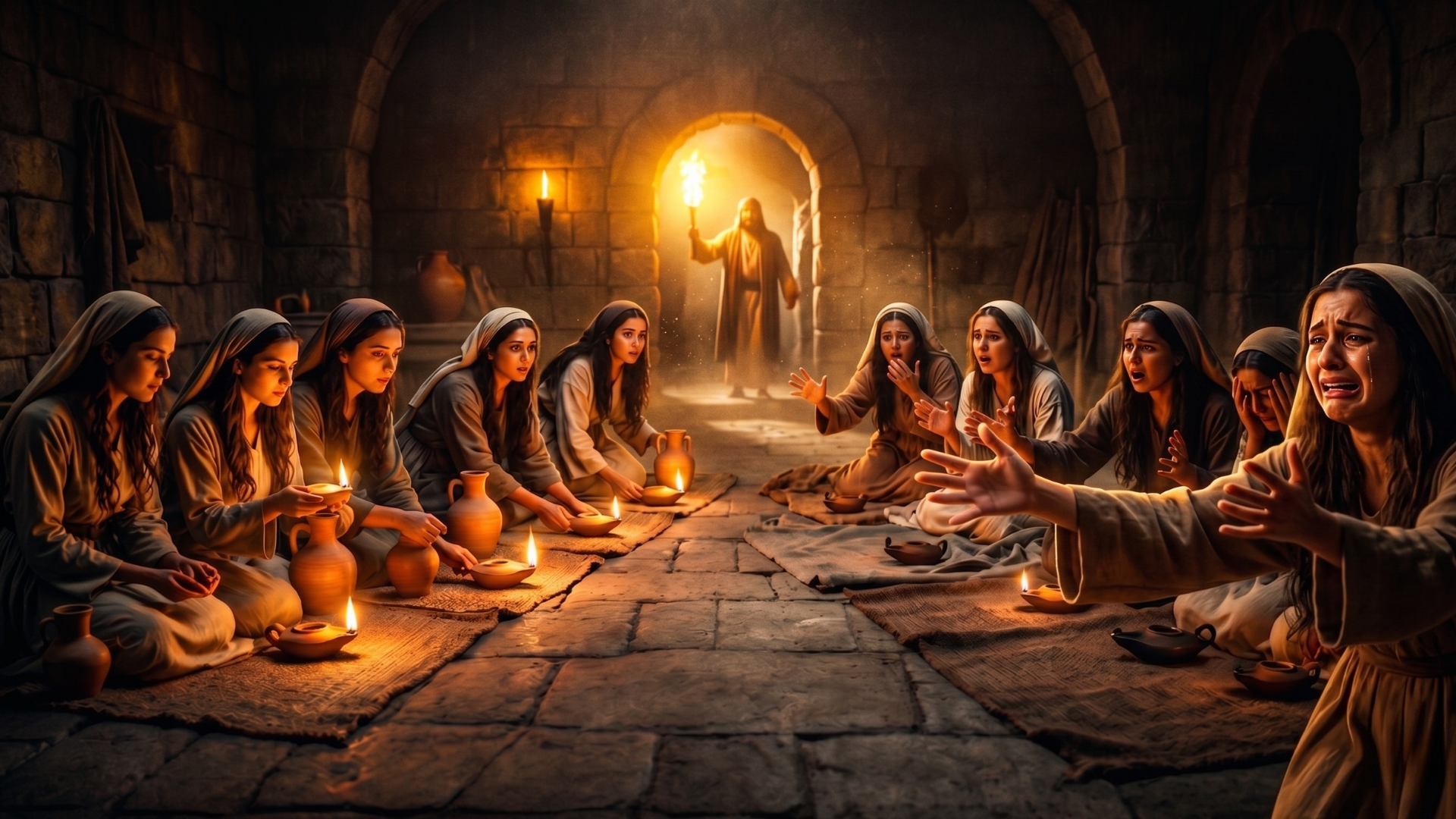
The night before the cross, in the garden of Gethsemane, Christ asked three disciples to do the very thing this teaching demands. “Watch with me.” (Matthew 26:38, KJV) They could not. The flesh was weak. They fell asleep at the threshold of the hardest hour history would ever record. And Christ kept watch alone. “O my Father, if it be possible, let this cup pass from me: nevertheless not as I will, but as thou wilt.” (Matthew 26:39, KJV) The lamps around Him went dark. He carried the oil into a darkness no human soul has ever entered alone.
The Bridegroom who tells you to watch is the One who watched first. He watched while you slept. He carried the cross while every other lamp went out. He descended through a darkness blacker than the darkened sun of Matthew 24:29 so that on the day the universe finally loses its light, the elect might be gathered to a Light no power of heaven can shake.
Word Study: Elect (Greek, Eklektos / ἐκλεκτός)
The Greek eklektos (ἐκλεκτός) in Matthew 24:31 means chosen, selected, called out. It is built from the verb eklego, meaning to pick out for oneself. When Christ sends His angels with a great sound of a trumpet, they do not gather humanity in general. They gather eklektos from the four winds. The trumpet sound is not a call to the curious. It is a summons to the ones He has personally selected and personally purchased. The mourning of the tribes in verse 30 is the mourning of those who refused. The gathering of the elect is the gathering of those He claimed at the cross. The unexpected hour separates the two by what was already true at the threshold.
Three Ways a Household Loses the Watch
Matthew 24 names one fatal posture, the household whose master is not at the threshold when the thief arrives. Scripture reveals three distinct patterns that produce that posture.
The Picnic on the Beach
This is the household that mistakes ordinary life for safety. The picnic is set. The children are laughing. The sandwiches are good. And the sirens are blaring offshore.
Christ named this pattern with the days of Noah. “For as in the days that were before the flood they were eating and drinking, marrying and giving in marriage, until the day that Noe entered into the ark, and knew not until the flood came, and took them all away; so shall also the coming of the Son of man be.” (Matthew 24:38-39, KJV) The text does not say they were committing extraordinary evil in that snapshot. It says they were eating, drinking, and marrying. Ordinary life. The sandwiches were not the sin. The deafness to the warning was. Noah had been building the ark in plain view for decades. They did not lack data. They lacked attention.
This pattern looks like maturity. It feels like balance. It is actually deafness in a calm room.
The Lengthening Delay
This is the household whose servant has begun to rewrite the master’s timeline. The longer the wait, the more the servant assumes safety. Behavior degrades not by rebellion but by drift.
Christ described it in the next chapter of the same teaching. “But and if that evil servant shall say in his heart, My lord delayeth his coming; and shall begin to smite his fellowservants, and to eat and drink with the drunken; the lord of that servant shall come in a day when he looketh not for him, and in an hour that he is not aware of.” (Matthew 24:48-50, KJV)
The mechanism is precise. The servant perceives a delay. The perception produces a conclusion. The conclusion produces a behavior change. The master returns and finds the servant frozen in whatever posture the delay produced.
The delay does not change the master’s arrival. It changes the servant’s expectation. That is how a watching household becomes a sleeping one.
The Cluttered House
This is the household so consumed with its own affairs that it has forgotten the master is coming back at all. Not asleep. Not delayed. Just buried under the noise of life.
Christ warned of it in Luke. “And take heed to yourselves, lest at any time your hearts be overcharged with surfeiting, and drunkenness, and cares of this life, and so that day come upon you unawares.” (Luke 21:34, KJV) The picture behind “overcharged” is being weighed down, like a ship riding low because the cargo is too heavy. The house is full. The schedule is full. The mind is full. And the threshold is unwatched not because anyone made the decision to abandon it, but because no one ever had the bandwidth to remember it.
This is the most common pattern in modern Christian life. It does not need a scandal to take you down. It only needs another year.
Three Guardrails for Keeping the Watch
Guardrail 1: The Daily Threshold
What you do: Establish a fixed moment each day when you stand at the spiritual threshold of your house and acknowledge that the master could return today. Open Scripture. Pray. Speak the truth aloud that this could be the hour. Not as morbid speculation. As honest orientation.
What it defends against: The Picnic on the Beach. The slow deafness that comes from confusing ordinary life with permanent safety. The threshold check resets the household’s posture by placing the return back into the present tense.
Its connection to Christ: Christ told the disciples “Watch therefore: for ye know not what hour your Lord doth come” (Matthew 24:42, KJV). He used the same Greek word in Gethsemane when He asked Peter to watch with Him one hour. The watch He commands is the watch He kept first. The threshold check joins your daily life to His vigil.
Guardrail 2: The Fig Tree Read
What you do: Read the season honestly through the lens of Scripture without setting dates. When the world shakes, do not panic. When the world is calm, do not coast. Compare what you see to what Christ said in Matthew 24, and let the comparison shape your discipline today.
What it defends against: The Lengthening Delay. The drift that happens when the servant decides the master is not coming soon. The fig tree read keeps you anchored to a season Christ told you to recognize, without falling into the date-setting trap He explicitly forbade.
Its connection to Christ: Christ commanded the disciples to read the fig tree, and He commanded them to refuse the date. “Of that day and hour knoweth no man, no, not the angels of heaven, but my Father only.” (Matthew 24:36, KJV) The Christian who reads the season faithfully is doing exactly what He authorized, no more and no less. Christ Himself walked between visible signs and hidden hours, fully knowing the Father’s timeline and fully submitting to the Father’s silence.
Guardrail 3: The Servant’s Work
What you do: Do the work the master gave you to do today as if He returns tonight. Mundane faithfulness. Your job done with integrity. Your family treated with grace. Your private life governed by His Word. Not a special spiritual program but the ordinary day, lived for an eternal audience.
What it defends against: The Cluttered House. The unwatched threshold that comes not from rebellion but from being buried under daily noise. The servant’s work is the watch translated into action.
Its connection to Christ: Christ ended this teaching with the picture of a servant found at his post. “Blessed is that servant, whom his lord when he cometh shall find so doing.” (Matthew 24:46, KJV) In Luke 12, He goes further. The master who returns and finds his servants watching does something no master in the ancient world would have done. He girds Himself, sits the servants down, and serves them the feast. The watch is not a sentence. It is the qualification for a reward so extravagant it inverts the entire order of master and servant.
Word Study: Ready (Greek, Hetoimos / ἕτοιμος)
The Greek hetoimos (ἕτοιμος) in Matthew 24:44 means prepared, in a state of readiness, fitted for the moment. The word does not describe a future intention. It describes a present condition. To be hetoimos is to be already in the posture the moment requires. Christ does not say “make yourselves ready when you see the signs.” He says “be ye also ready: for in such an hour as ye think not the Son of man cometh” (Matthew 24:44, KJV). The unexpected hour does not give you time to prepare. It only reveals whether the preparation was already there. The watching household is not the one rushing at the doorway. It is the one whose posture at the threshold has not changed because the threshold was always its priority.
The Promise That Outlasts the Cosmos
“Heaven and earth shall pass away, but my words shall not pass away.” (Matthew 24:35, KJV)
The promise is fixed before the wound is named. The universe Christ told you to read can crumble. The sun, the moon, the stars, the powers of heaven, every fixed point you have ever oriented your life around. All of it will eventually pass. But His words remain. The teaching He gave on the Mount of Olives outlasts the mountain.
If you have come to this article carrying a quiet anxiety that you are not watching well enough, that the signs are accelerating and your spiritual lamp feels dim, hear this. The hour is hidden, but the promise is not. He did not give you a riddle. He gave you a Word that will outlive the cosmos, and He gave you Himself as the watching Servant who watched first when no one else could.
The disciples who failed to watch in Gethsemane are the same disciples Christ restored on the shore of the lake, the same disciples He commissioned to carry His Word to the ends of the earth, the same disciples who finally watched until they died for the watching. The flesh that failed once was not the final word about who they were. The Bridegroom of Matthew 24 is the same Christ who served them breakfast on the beach after they had abandoned Him at the cross.
Your watch is not perfect. His was. The trumpet that gathers the elect gathers people who are gathered because He paid for them, not because their lamps never flickered. The unexpected hour is unexpected for the world. For the household that has tied itself to the One who watched alone in the garden, it is not unexpected. It is the homecoming the watch was for.
Your Next Step and Frequently Asked Questions
You came to this article looking for a timeline. Christ never gave one. He gave something better and more demanding. He gave you the discipline of an ordinary Tuesday lived as if He returns tonight. The unexpected hour is not a question of when. It is a question of how you stand at your threshold today.
Frequently Asked Questions
1. What does “the unexpected hour” mean in the Bible?
The phrase comes from Matthew 24:44 (KJV), where Jesus says, “in such an hour as ye think not the Son of man cometh.” The unexpected hour refers to the moment of Christ’s return, which Scripture says is deliberately hidden so that believers maintain spiritual readiness through faithful daily living rather than calculated preparation at the last minute.
2. What is Jesus teaching in Matthew 24?
In Matthew 24, Jesus answers His disciples’ question about the sign of His return and the end of the age. He describes cosmic signs, the appearance of the Son of man in the clouds, the gathering of the elect, and the parable of the fig tree. He then commands watchfulness, naming the unexpected hour as the central test of true readiness.
3. What does it mean to “watch” for Christ’s return?
To watch, in Matthew 24:42 (KJV), means to stay spiritually awake and live in continual readiness. It is not anxious sky-watching. It is mundane faithfulness, the disciplined practice of daily prayer, Scripture, integrity, and service done in the awareness that the master could return at any hour.
4. Why didn’t Jesus tell us when He would return?
Jesus said that “of that day and hour knoweth no man, no, not the angels of heaven, but my Father only” (Matthew 24:36, KJV). The hidden hour prevents complacency. If believers knew the date, they would procrastinate. The unknown hour produces the only readiness that proves faith, the readiness that holds when no calendar offers relief.
5. What are the signs of Christ’s return according to Matthew 24?
Matthew 24 describes tribulation, the darkening of the sun and moon, falling stars, the shaking of the powers of heaven, the appearance of the sign of the Son of man, the mourning of the tribes, and the trumpet that gathers the elect. Jesus also points to the days of Noah as a pattern, where ordinary life continued until sudden judgment.
6. How can I be ready for Christ’s return without being anxious?
Readiness is not vigilance fueled by fear. It is mundane faithfulness fueled by trust. Christ gave the picture of a servant found at his post, doing the master’s work (Matthew 24:46, KJV). Daily prayer, Scripture, integrity at work, grace at home, and obedience in private constitute the watch. The anxious household stares at the sky. The watching household stays at the post.
The Unexpected Hour Readiness Audit (choose at least 2 this week)
Option 1: Read Matthew 24:29-44 slowly. Identify which of the three patterns from Section 4 most resembles your current posture. Name what you find without softening it.
Option 2: Establish the daily threshold check from Guardrail 1. Pick a fixed moment each day this week to acknowledge that today could be the hour, then open Scripture and pray.
Option 3: Read Matthew 24:48-51. Examine where you have begun to assume the master is not coming soon. Identify one specific area where the perceived delay has changed your behavior, and name it.
Option 4: Read Luke 21:34-36. Inventory what is overloading your house. Identify one cargo of life that is weighing you below the watching line, and pray about removing it.
Option 5: Read Matthew 24:36 alongside Matthew 24:32-33. Practice the fig tree read. Compare current world conditions to Scripture without setting a date, and let the comparison shape your discipline today rather than your speculation about tomorrow.
Option 6: Read Matthew 26:36-46. Sit with Christ in Gethsemane. Let the picture of the One who watched alone reorient your understanding of the watch He commands.
Option 7: Read Matthew 24:46 and Luke 12:35-37 together. Identify one specific work the master has given you for this week, and do it as if He returns tonight.
If you have stood at the threshold of this article and felt the weight of the watch, The Versatile Christian Co. invites you to keep walking through Scripture with us. We exist to bring the text close enough to touch, so that the household standing at the threshold tonight is not standing alone.
“Therefore be ye also ready: for in such an hour as ye think not the Son of man cometh.” (Matthew 24:44, KJV)