You have read the same passage three times and it still has not moved you.
You sat in a sermon last Sunday. The preacher was clear. The text was plain. You nodded at the right moments, followed along, even took a note or two. And when you walked out into the parking lot, something essential had not followed you through the door.
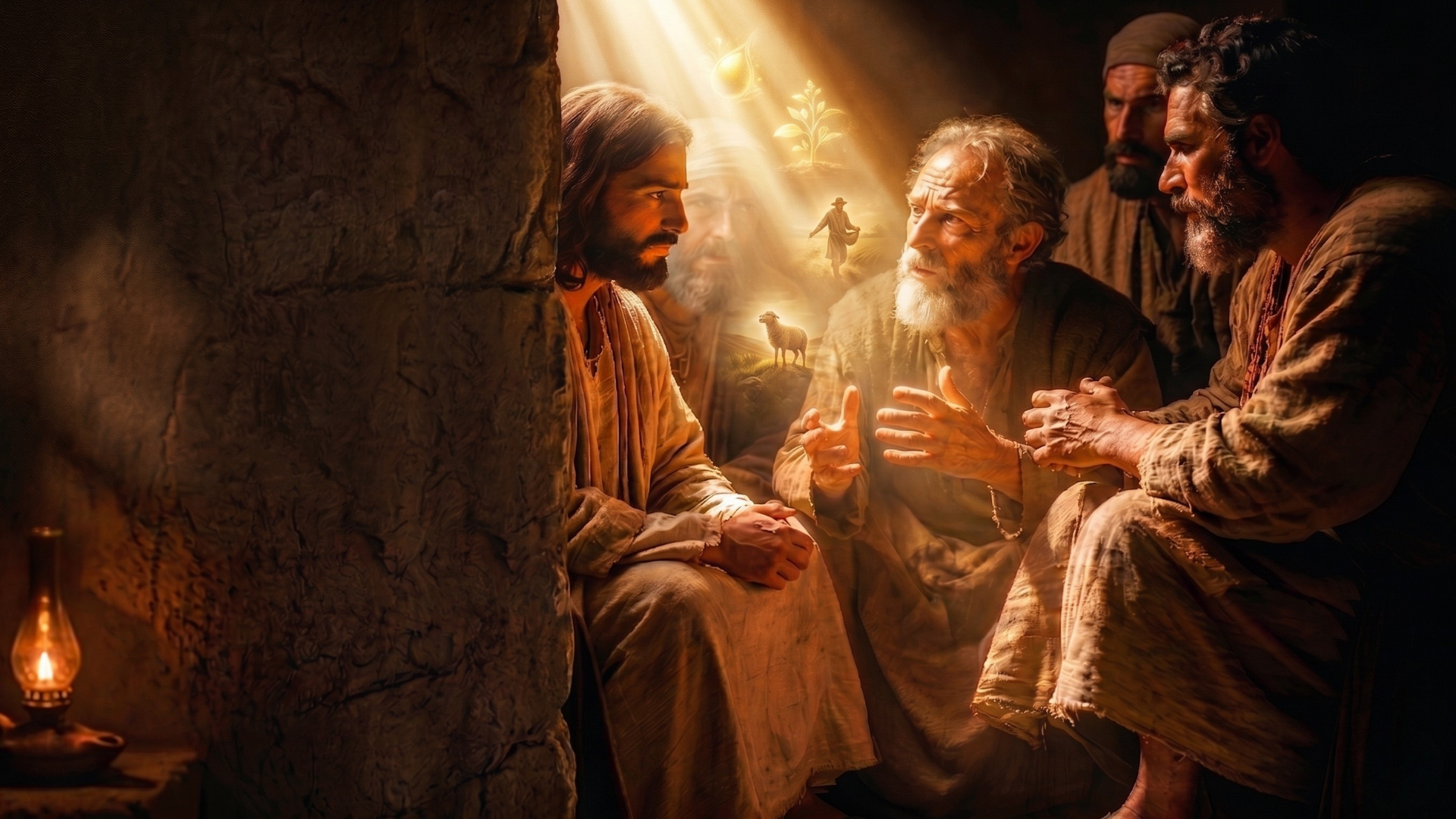
You are not alone in that experience. The disciples had it too. They watched Jesus teach the largest crowds of His ministry, watched the crowd receive the words and walk away apparently unchanged, and finally pulled Him aside to ask the question that cuts straight to the problem.
“Why do You speak to them in parables?” (Matthew 13:10, NKJV)
It is the right question. If the message is true, if it is urgent, if it is the word of the living God spoken in the flesh: why wrap it in a story about soil? Why risk being misunderstood?
Jesus does not evade the question. His answer is one of the most searching passages in all of Scripture. It explains why the same words can open one person’s understanding and leave another’s completely untouched, and what it means that the condition of your heart determines what you are able to receive.
This is not a comfortable passage. But it is a merciful one. And it is for you.
The Moment the Teaching Changed
To understand why Jesus shifted to parables, you have to know what happened immediately before.
Matthew 12 is a chapter of escalating hostility. The religious leaders have moved past skepticism. They have accused Jesus of casting out demons by the power of Beelzebub. They are plotting His destruction. By the time Jesus walks down to the shore in Matthew 13, He is not standing before a neutral crowd. He is standing before a people who have already seen the light and decided to close their eyes to it.
That context is not incidental. It is the hinge on which the entire passage turns.
Jesus climbs into a boat and begins to teach in a way He has not used before. Farmers scattering seeds. Wheat and weeds growing side by side. Mustard seeds. Buried treasure. The disciples notice the shift immediately. Their question in verse 10 is urgent precisely because they sense that something has changed. The method has changed because something in the audience has changed.
This is the moment Christ introduces a mode of teaching that performs two opposite functions simultaneously. To those whose hearts are open, the parable illuminates. To those whose hearts are closed, the parable conceals. The same story. The same words. Two entirely different outcomes determined not by the quality of the teaching but by the posture of the hearer.
“Because it has been given to you to know the mysteries of the kingdom of heaven, but to them it has not been given.” (Matthew 13:11, NKJV)
The line is drawn. And the criterion that draws it is not intelligence, not education, not religious pedigree. It is the given gift of grace received by an open and willing heart.
Why the Same Words Land Differently
Jesus does not leave the principle in the abstract. He names the mechanism.
“For whoever has, to him more will be given, and he will have abundance; but whoever does not have, even what he has will be taken away from him.” (Matthew 13:12, NKJV)
This sounds severe. But Jesus is not describing a transaction. He is describing a trajectory.
Think of someone learning a language. A person who has truly applied themselves to Spanish, who has built a real foundation: when they enter a Spanish-speaking environment, their understanding compounds. New phrases land. Vocabulary accrues. But a person who sat in the class and never engaged: when they encounter the language later, even the thin residue of what they once heard has faded. The atrophy is not punishment. It is the natural result of what they chose to do with what they received.
Spiritual receptivity works by the same law. Every person who encounters the Word of God is either softening or hardening. There is no static position. The crowd on the shore of Galilee had the audible voice of God incarnate standing before them. That is an almost incomprehensible privilege. But because their hearts lacked the inner receptivity to receive it, they lost the very opportunity the moment presented.
The parable becomes a sieve. It passes truth to the hungry and withholds it from the dismissive. Not as cruelty. As a precise accommodation of the heart’s own chosen condition.
The Anatomy of a Closed Heart
Jesus does not leave the diagnosis at the surface. He opens Isaiah’s ancient prophecy and applies it with surgical precision.
“Hearing you will hear and shall not understand, and seeing you will see and not perceive; for the hearts of this people have grown dull. Their ears are hard of hearing, and their eyes they have closed, lest they should see with their eyes and hear with their ears, lest they should understand with their hearts and turn, so that I should heal them.” (Matthew 13:14–15, NKJV)
Three things deserve careful attention.
First, the problem is not in the ears or the eyes. The ears are hard of hearing because the heart has grown dull. The sensory failure is downstream of a deeper failure. Every dead end in the spiritual life runs back to the condition of the heart.
Second, the closing of the eyes is active, not passive. The text does not say their eyes were closed. It says they have closed them. This is willful. The blindness is not something that happened to them. It is something they chose.
Third: look at what they were blocking. The sequence Christ traces is perception, understanding, turning, healing. They closed their eyes to avoid the turning. Not because the turning was unavailable. Not because God was withholding the healing. But because a heart that has grown comfortable in its own way hates the turning more than it wants the healing.
The doctor was present. The healing was available. They locked the door from the inside.
Word Study: Dull (Greek, Pŋrōō / πωρόω)
The Greek Pŋrōō (πωρόω), translated “grown dull” in Matthew 13:15, is a medical term from the ancient world. It refers to the hardening or thickening of tissue, the formation of a callous over a surface that was once sensitive. The word describes what happens to a wound that closes over itself without healing properly: hard on the outside, impervious to touch. A calloused heart is not a cold heart. It is a heart that was once capable of feeling and has, through repeated resistance to what it felt, insulated itself against response. The parable cannot penetrate what has sealed itself shut. That is not God’s limitation. It is the heart’s.
Christ: The One Who Opens Eyes
There is a turn in Matthew 13:16 that changes the entire atmosphere of the passage.
Jesus has been describing the tragedy of closed eyes. And then He turns His gaze from the crowd to the disciples. Every reader leaning in is included in that turn.
“But blessed are your eyes for they see, and your ears for they hear.” (Matthew 13:16, NKJV)
Blessed is not a casual word here. It is the declaration of a state of being that the greatest figures in redemptive history longed for and were not granted.
“For assuredly, I say to you that many prophets and righteous men desired to see what you see, and did not see it, and to hear what you hear, and did not hear it.” (Matthew 13:17, NKJV)
Let that land. Abraham left everything for a promise he never saw completely fulfilled. Moses received only the trailing edge of God’s glory. Isaiah wrote the very prophecy Christ is quoting and died without seeing the One it described. Daniel. David. The entire Hall of Faith pressed toward a horizon that did not arrive in their lifetime.
And Christ looks at His disciples: fishermen, a tax collector, ordinary men: and tells them they are seeing what those giants strained toward and never reached.
This is what it means that understanding is given. Grace operates by gift, not by merit. The same grace that opened their eyes is extended to every person who comes to Christ willing to receive it.
Christ does not open eyes from a distance. The calloused heart does not soften itself. It is softened from outside, by the One who is both the giver of the gift and the keeper of the door. He is not waiting for you to achieve the receptivity before He offers the grace. He is offering the grace to produce the receptivity.
Word Study: Given (Greek, Dedotai / δέδοται)
The Greek Dedotai (δέδοται) in Matthew 13:11 is the perfect passive of didōmi, to give. The perfect tense indicates a past action with a present and continuing effect: it has been given and remains given. The passive voice indicates that the recipients are not the source of the action: it was done to them, not by them. Understanding the mysteries of the kingdom is not an achievement the disciples earned. It is a grace extended to them and continuing to hold them. That is precisely what makes it gift rather than wage. And every gift extended by the same Giver is available on the same terms: not merit, but receptivity.
Three Ways the Heart Stays Closed
The parable is still doing its work today. The same text that separated the crowd from the disciples on the shore of Galilee is separating readers now. These are the three patterns through which a heart stays closed to what the Word is trying to open.
The Intelligence Substitution
This is the assumption that understanding Scripture is primarily a matter of cognitive effort: that if you bring enough study, enough commentary, enough cross-referencing, the meaning will yield to your intelligence. The mysterion of the kingdom does not yield to intellect. It is received by a surrendered heart, or it is not received at all. The Pharisees had more theological education than the disciples. They could cite Scripture faster, trace lineage further, debate finer points longer. And they closed their eyes and plotted the death of the Word standing in front of them. Intelligence is not the key. It is a tool that can be wielded in the service of a closed heart just as easily as an open one.
The Comfort of the Unchanged Life
This is the pattern Christ traces most carefully in Matthew 13:15. The crowd closed their eyes specifically to avoid the turning. Not because the healing was out of reach. Because the turning was too costly. A life that has grown settled in its own patterns, its own habits, its own version of righteousness, resists the Word at exactly the point where the Word requires change. The Bible is read. The sermon is heard. The notes are taken. But the application dies at the moment it would require the actual turn. And every time the turn is refused, the callous thickens. The Pŋrōō forms one layer at a time.
The Erosion of Privilege
The disciples were in danger of this after the fact. Verse 12 is as much a warning to them as it is a description of the crowd. To be given the mysteries of the kingdom and treat that gift casually: to sit with the open Word and let the week’s noise drown out what it is saying: is to set the atrophy in motion. The privilege that prophets and righteous men died longing for is now ordinary to you. The full completed Word of God, the indwelling Holy Spirit, the finished work of Calvary: these are not background features of your life. They are the inheritance that Abraham saw from a distance and strained toward and did not reach. To coast on them is to begin losing them.
Three Guardrails for the Open Heart
The heart does not stay open by accident. These three guardrails maintain the posture that keeps the Word alive and working.
Guardrail 1: The Stewardship of the Small
What you do: Obey what the Word has already shown you before seeking more. Identify the last clear instruction Scripture gave you and ask whether it has been acted on. Make that the entry point to every subsequent reading.
What it defends against: The erosion of privilege. Matthew 13:12 establishes the principle: what is received and stewarded compounds into abundance. What is received and neglected atrophies. The reader who collects understanding without responding to it is accumulating what will eventually be taken from them.
Its connection to Christ: Jesus said in John 14:21, “He who has My commandments and keeps them, it is he who loves Me. And he who loves Me will be loved by My Father, and I will love him and manifest Myself to him.” The manifesting follows the keeping. Christ reveals Himself progressively to the heart that obeys progressively. Stewardship is the door through which deeper revelation enters.
Guardrail 2: The Honest Examination of the Turn
What you do: When you finish reading a passage of Scripture, ask one question before closing the Bible: what turn does this require of me? Not what did I learn. What must change. Name it specifically and bring it to God in prayer before the day moves past it.
What it defends against: The comfort of the unchanged life. The chain in Matthew 13:15 runs perception, understanding, turning, healing. The chain breaks at the turning. The Pŋrōō forms precisely where understanding stops short of the turn it demands. This guardrail re-engages the chain at its breaking point and insists on the moment of application that keeps the heart soft.
Its connection to Christ: The healing at the end of Matthew 13:15 is Christ’s own offer: “I should heal them.” He is not withholding the healing. He is waiting at the end of the chain that the closed heart refuses to complete. Every genuine turn is met by Him before it finishes.
Guardrail 3: The Weight of What Has Been Given
What you do: Before reading Scripture, spend one moment in deliberate acknowledgment of what you hold. The completed Word. The indwelling Spirit. The finished cross. The access that Abraham died straining toward. Let that recalibrate the posture before the first verse is read.
What it defends against: The intelligence substitution. A heart that approaches the Bible as a text to be solved brings intellect. A heart that approaches it as the inheritance of prophets who died without receiving it brings reverence. The reverence is the posture that keeps the heart receptive. Intelligence without reverence is the posture of the Pharisee who stood before the Word made flesh and saw a heretic.
Its connection to Christ: Matthew 13:17 establishes the stakes. Many prophets and righteous men desired to see what you see and did not. That desire was not satisfied in their lifetime. It was satisfied in His. Every time you open the Word, you are receiving a revelation the greatest saints of the old covenant pressed toward and were not given. To receive it lightly is to misread the price at which it came.
Word Study: Turn (Hebrew, Shuv / שוּב)
The Hebrew Shuv (שוּב), embedded in Christ’s quotation of Isaiah in Matthew 13:15, is the foundational Old Testament word for repentance. It is a physical term before it is a spiritual one: a literal reversal of direction, a U-turn on a road. It does not mean feeling sorry. It means stopping, facing the opposite direction, and walking that way. The crowd in Matthew 13 understood exactly what shuv would cost them. It would mean acknowledging they had been walking the wrong way. It would mean their religious structure, their social standing, their settled certainties, would have to be reoriented around the One standing in the boat. They chose the road they were on. The calloused heart does not fear pain. It fears the turn. Shuv is what the parable is designed to produce: and what the closed heart is designed to prevent.
To the One Who Is Straining to Hear
If you came to this article with the low fear that the Word has somehow closed itself to you: that you have read and not understood, prayed and not heard, sought and not found: hear this directly.
The straining is not the symptom of a closed heart. It is the evidence of an open one.
A calloused heart does not strain. It does not feel the gap between where it is and where it needs to be. It is comfortable precisely because the Pŋrōō has insulated it from that discomfort. The fact that you feel the weight of the distance is the very thing that distinguishes you from the crowd that walked away from the shore without a second thought.
Jesus looked at the disciples in verse 16 and called them blessed. Not because they had achieved something the crowd had failed to achieve. But because they were there. Because they had followed. Because when the parable landed and they did not understand, they came to Him and asked. The open heart is not the heart that already understands everything. It is the heart that keeps coming back to the One who does.
Christ’s own word in Matthew 13:15 is a promise dressed as a diagnosis: “I should heal them.” The healing is not withheld. It is waiting at the end of the turning. And the turning does not have to be complete before the healing begins. The father in the parable ran toward the son while he was still a great way off. The Physician does not wait for you to arrive at His door fully recovered. He comes toward the one who turns.
If you are reading this with eyes that want to see, you are already in the posture that Matthew 13:16 describes as blessed. Bring that posture to the Word. Keep bringing it. The King is still speaking. And the same grace that opened the disciples’ eyes has not been exhausted.
Your Next Step and Frequently Asked Questions
You have one posture to protect and one chain to complete. Keep the heart soft by stewarding what has already been given. Let every encounter with the Word reach the turning point rather than stopping at the information. And receive the Word with the weight it deserves: as the inheritance of prophets and kings who died not having seen what you now hold in your hands.
Frequently Asked Questions
1. Why did Jesus hide truth in parables instead of speaking plainly?
Matthew 13:13 gives the reason directly: because seeing, they did not see. The blindness was not the result of the parables. It was the cause. Jesus taught in parables because the crowd had already chosen not to perceive. The parables honored that chosen condition while preserving the truth for those with hearts open to receive it.
2. What does “the mysteries of the kingdom of heaven” mean?
In biblical Greek, mysterion does not mean a puzzle to be solved by clever reasoning. It means a divine secret that has been hidden in God and can only be revealed by God. The mysteries of the kingdom are the deep realities of how God’s reign enters and transforms the human heart through Christ: truths hidden from prior generations and now revealed in the Gospel.
3. Is spiritual understanding based on intelligence or education?
No. Matthew 13:11 states that understanding the mysteries is given: it is a gift of grace, not an achievement of intellect. The Pharisees had the greatest theological education of their generation and closed their eyes to the Word standing in front of them. The disciples were fishermen and tax collectors. The criterion is not capability. It is the posture of the heart.
4. What does it mean that “even what he has will be taken away”?
It describes spiritual atrophy. When truth is received and not responded to, it does not stay neutral. It diminishes. The principle in Matthew 13:12 is that spiritual receptivity either compounds through use or decays through neglect. This is not punishment imposed from outside. It is the natural consequence of what you do with what you have been given.
5. Why did Jesus quote Isaiah 6 in this passage?
To establish that the pattern of Israel’s closed eyes was not a surprise to God. Isaiah’s prophecy, written centuries earlier, described exactly the spiritual condition Christ was now encountering. The use of parables was not a reactive improvisation. It was the fulfillment of a long-ordained response to a long-anticipated posture of the heart.
6. What does it mean that “their eyes they have closed”?
The verb is active, not passive. The crowd did not go blind. They chose not to see. Matthew 13:15 traces the reason: to avoid the turning that seeing would require. The closing of the eyes was a defense against the cost of the open ones. They preferred the story about farming to the life change the story was requiring.
7. Why were the prophets and righteous men not given what the disciples received?
Matthew 13:17 does not explain the full divine counsel behind it. What it establishes is the weight of the contrast: the greatest figures of the old covenant pressed toward the revelation of Christ and died not having received it. The disciples, and every believer since, stand on the other side of the fulfilled promise. The gift was not earned. It was the result of living in the fullness of what those saints only saw from a distance.
The Perception Audit (choose at least 2 this week)
Option 1: Read Matthew 13:1–17 in full. After each section, stop and ask: what does the condition of my heart look like in this passage? Which hearer am I most like and why?
Option 2: Identify the last clear instruction Scripture gave you that has not yet been acted on. Write it down. Bring it to God in prayer and take the first concrete step toward the turn it requires.
Option 3: Read Isaiah 6:1–10 and then return to Matthew 13:14–15. Trace how Christ applies the ancient prophecy to the crowd on the shore. Ask God to show you where in your own life the sequence perception, understanding, turning, healing has broken down.
Option 4: Read Matthew 13:44–46, the parables of the hidden treasure and the pearl of great price. Ask what each man gave up to obtain what he found. Then ask what the Word is asking you to give up and whether you are treating the kingdom as a treasure worth the cost.
Option 5: Sit with Matthew 13:16–17 for ten minutes. Read the list of what the prophets desired and did not receive. Then name three specific things you have access to that they did not: the completed Scripture, the indwelling Spirit, the finished cross. Let the weight of that reframe how you approach your next reading.
Option 6: Read Hebrews 11:13–16, the passage on the saints who died not having received the promises but seeing them from a distance. Ask whether the privilege you have been given is reflected in the seriousness with which you approach the Word.
Option 7: Take one parable from Matthew 13 you have read before but never fully applied. Read it slowly, then ask the single question: what turn does this require of me? Write the answer. Do not move on until you have named it specifically.
At The Versatile Christian Co., we are servants to the Word. Our mission is to bring the text close enough to touch, so that the parables Christ spoke on the shore of Galilee are not ancient riddles you observe from a distance, but living words that find the posture of your heart and do their work.
“But blessed are your eyes for they see, and your ears for they hear.” (Matthew 13:16, NKJV)